
Defra's Forest Research Gets Instant Data for Climate-Change Studies
Battery-powered sensors streaming soil, climate, and tree-growth data from roughly 50 UK forests, replacing manual collection.
Forest Research is the research agency of the Forestry Commission and part of the UK’s Department for Environment, Food & Rural Affairs (Defra). It is Great Britain’s principal organization for research and scientific work in forestry and the support of its sustainability.
Its vision is to be a world leader in applied forest science and a trusted, recognized provider of expertise, data, products, and services to government in the fields of trees, wood, forests, and natural resources - helping to deliver the environment ministry’s strategy, “A Green Future: Our 25 Year Plan to Improve the Environment”. We were glad that, through our partner Vodafone UK, they approached us with a project to monitor the effect of climate change on tree growth across the UK.
The Challenge
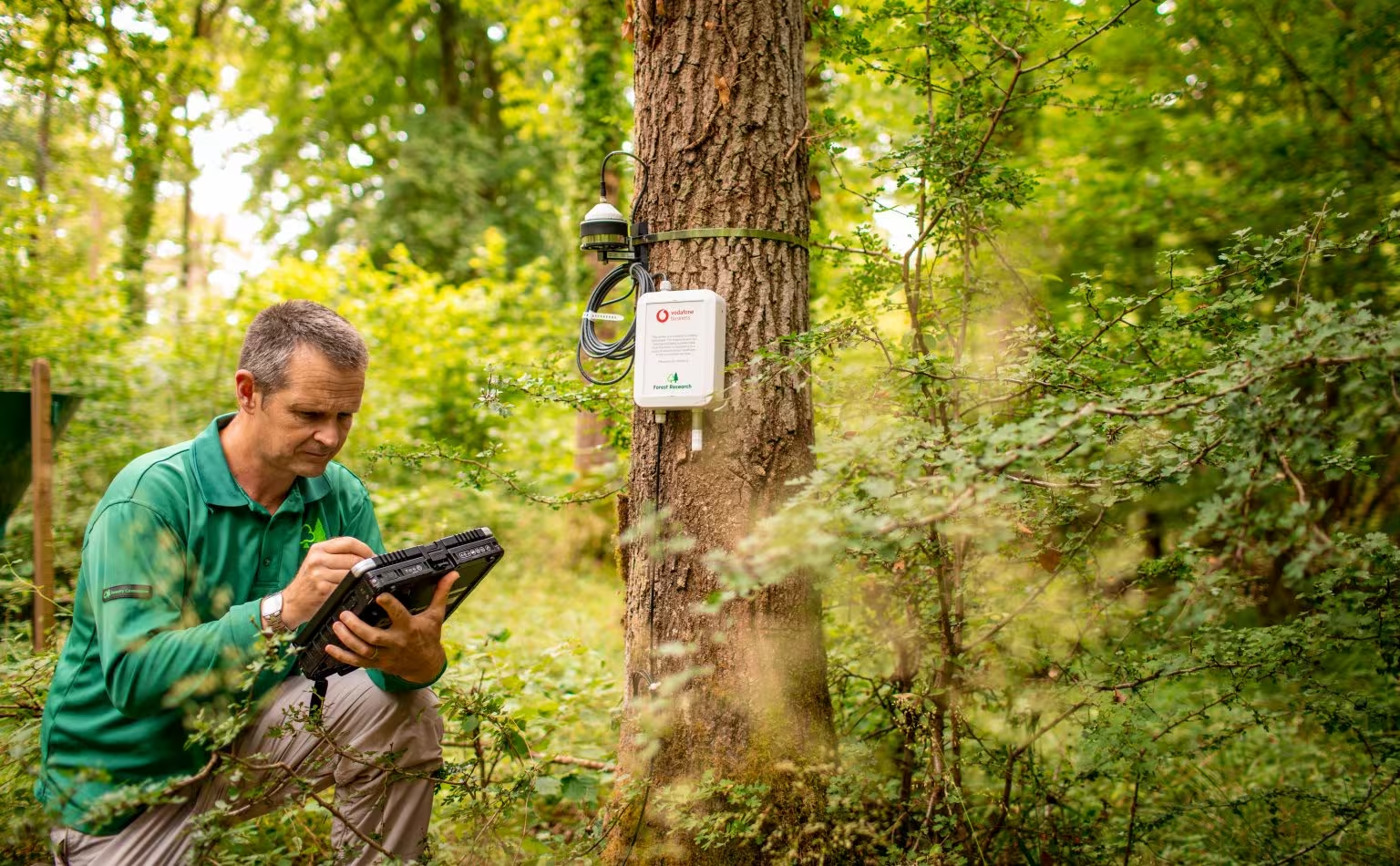
Forest Research carries out climate measurements in roughly 50 forests across Great Britain, seeking answers to questions about the climate and its effect on tree growth:
- How fast do trees grow in a given period?
- Which factors most influence tree growth?
- What impact do summer heatwaves have on tree growth?
- Are there differences in tree growth between microclimates within a single area?
- Which trees grow the most?
- How does the growth rate differ between regions?
Until now, measurement and evaluation were complicated by manual data collection and a limited number of weather stations that require permanent mains power. The problems with the original approach were clear:
- Manual data collection onto a storage medium at the measurement site is costly, and the data is only available days later
- Measurements were taken only at a few locations with access to electricity
- There was no data on tree-trunk growth
We knew the challenge would be to reliably measure and transmit air temperature and relative humidity, soil moisture, and tree-trunk growth from a battery-powered device for several months.
The Solution
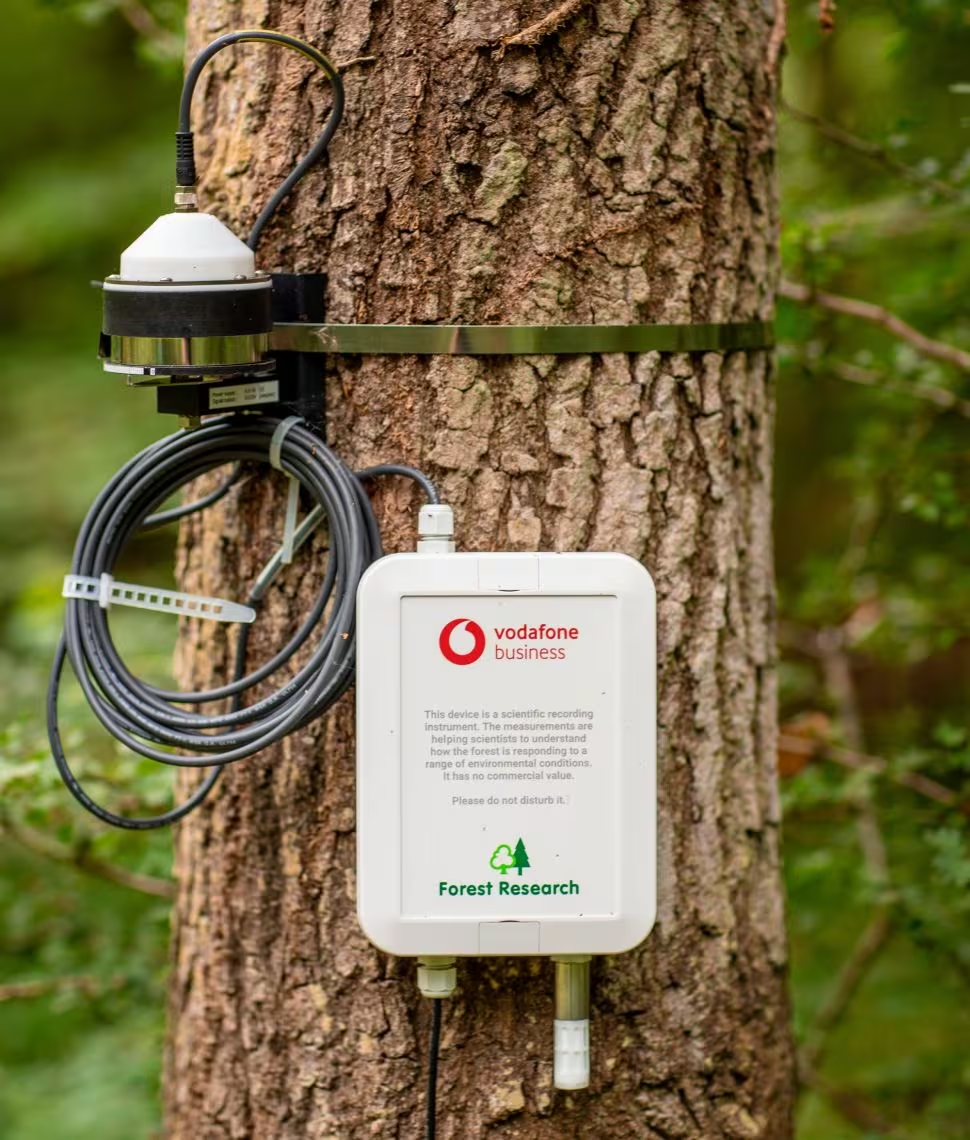
Our CHESTER IoT Hub with NB-IoT connectivity meets the project’s requirements. To the internal temperature sensor, accelerometer, and GPS module we added an external temperature and humidity sensor, our own capacitive soil-moisture sensor, and a dendrometer from the Czech company EMS Brno. The device lets Forest Research monitor:
- outdoor air temperature
- outdoor relative humidity
- GPS position
- tree shock and tilt
- tree-trunk width
- soil moisture
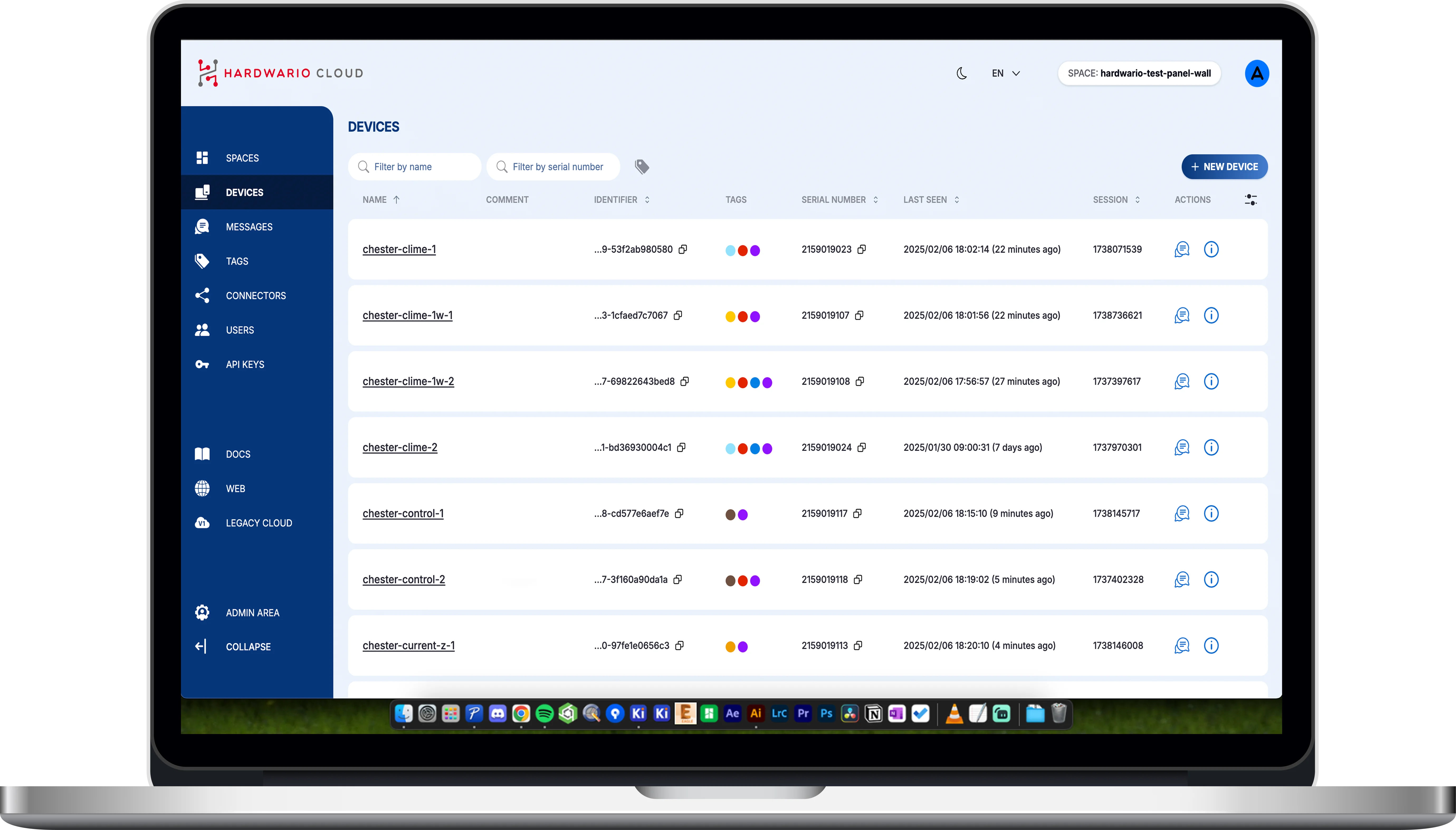
A key part of the solution is communication over Vodafone’s NB-IoT network. Thanks to CHESTER’s low-power design and NB-IoT technology, the devices can be battery-powered and placed on trees across all locations of interest to reliably collect data online. The measured values are sent to HARDWARIO Cloud, then on to the Grafana visualization tool and into the hands of researchers, who use them to find answers to their questions. Outputs are available to researchers in Grafana and via REST API, and the data is also obtained regularly through CSV exports.
As a side benefit, the project also let Vodafone UK test NB-IoT signal coverage - information they can use when considering further network expansion.
Results
Through this collaboration with Vodafone UK and HARDWARIO, Defra and Forest Research now obtain online data on climatic conditions in forests. This lets them study how changing climatic conditions affect tree growth over time, and the differences between microclimates, regions, and tree species. The deployed CHESTER devices will send the required data for months and years without access to a power socket.
“We are always looking for ways to use innovative technologies to improve data collection. In this project we focused on forest monitoring, but we intend to use the technologies for almost anything in the environment. This innovative project has the potential to change and significantly streamline the way we collect and analyze data, because it greatly reduces the number of personal visits to measurement sites, especially remote ones. The project will also let us gather more data - crucial for evaluating the influence of individual trees on climate change. If the test period is successful, we hope it will expand into other areas of environmental monitoring and mark a step change in the amount of data we can collect and analyze.”
Dr Matthew Wilkinson, Forest Research
“Trees are a unique natural resource that plays a crucial role in the fight against the biodiversity and climate crises we face. This exciting partnership uses emerging IoT technologies to improve our understanding of the impacts of environmental change on our nation’s forests, which will help us shape our policies. The new technology provides higher-quality data and, importantly, lets us monitor places that current technologies cannot reach.”
Malcolm McKee, Chief Technology Officer, Defra
“Through our partnership with HARDWARIO we were able to deploy high-quality IoT devices that played a key role in this successful project. We drew on their expertise in low-power electronics and NB-IoT technology, as well as their personal technical support. I look forward to working with HARDWARIO again in the future.”
Stephen Di Laudo, Client Director for Central Government, Vodafone
Related Articles

HARDWARIO and DeltaVue: Satellite monitoring of infrastructure from Arctic roads to Brazilian mines

HARDWARIO and Statotest: Smarter Infrastructure Monitoring with IoT Technologies
